
March On!™ Festival 2026 | September 29 - October 6, 2026 | Celebrating 250 Years of Democracy: The Unfinished Story
Here’s what’s in the White House welcome packet for emigrating Afrikaners from South Africa: “an Android tablet, an American flag and copies of the Constitution and Declaration of Independence… a packet of literature that provides a sanitized, Trump-approved view of American and South African history, one that criticizes racial equity and civil rights laws and promotes claims of discrimination against white people.” (NY Times, June 23, 2026)
This while the administration bends over backward to block other, non-white immigrants, political and climate refugees from a host of other countries.
This slant in the telling of American history dovetails with the racist rationale that upheld South Africa’s apartheid system for decades, which may appear that the government is providing tacit approval of separatist tactics here.
The truth is, Afrikaners looked to the system of American Jim Crow laws as their blueprint and legal model for apartheid. Just as in this country, the laws were reinforced with textbooks and entertainment programs that brainwashed the citizenry into its supremacist justifications, and the rest of the world into historical amnesia and, for a long time, political inertia.
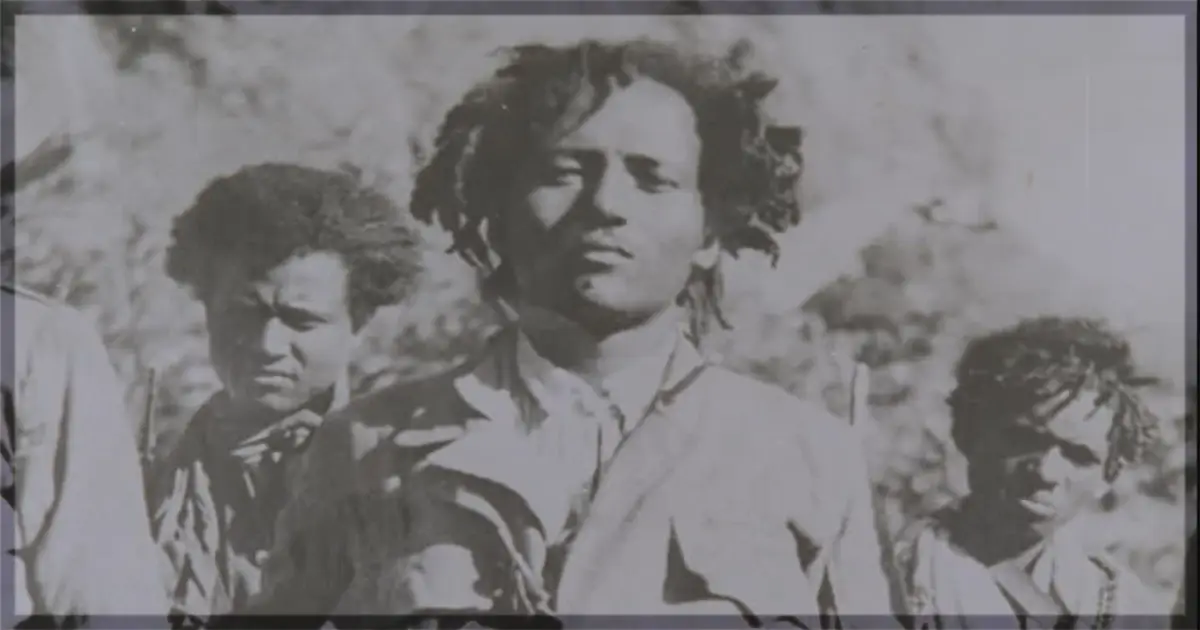
Something similar happened during Italian dictator Benito Mussolini’s attempt to re-colonize Ethiopia in 1935, as told in the new five-part documentary, Black Lions, Roman Wolves: The Children of Adwa directed by the noted Ethiopian-born filmmaker and retired Howard University professor, Haile Gerima. The film premiered at the Berlin Film Festival and the was screened recently at the Black Star Film Festival in Philadelphia.
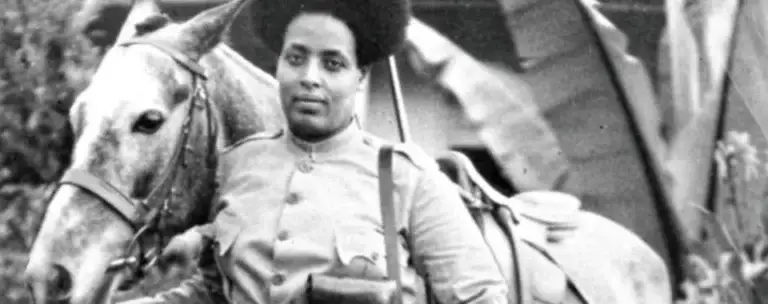
The second Italian invasion was a vengeful attempt by Mussolini to rectify the resounding defeat Italy suffered at the Battle of Adwa in 1896, when Ethiopia became the only African nation to successfully preserve its sovereignty by winning a major military victory against an invading European colonial army.
The 2nd invasion was launched under the guise of “civilizing” the Ethiopians. Besides revenge, Its real purposes were commandeering the land and diverting Italians from emigrating to America. Over the years, the war passed as a footnote in Italian history books, completely excluding the depth and strength of resistance by the Ethiopians themselves.
“While the stabber can afford to forget, the one who gets stabbed never forgets.”
- Black Lions - Roman Wolves
Gerima’s film, developed over the past 20 years, captures first-person accounts of those still living from that period and their descendants. Gerima even records his own childhood recollection of his father, Tafeka Gerima, a renowned anti-fascist traveling playwright, actor and poet, who narrowly escaped a public hanging.
Augmenting the film (perhaps too much) is vividly gruesome footage of the concentration camps, starving prisoners, beheadings, draggings and hangings inflicted by the Italians on men, women and children. While I knew that Italy colonized Ethiopia for a short time, I never learned about any of this.
The film is subtitled in Amharic and English, with a haunting, eclectic mix of Ethiopian music, war chants, praise poetry and sound effects that extend and enhance the cultural resonance and historical reclamation.
Throughout Gerima’s career, he has placed his cultural and political integrity at the forefront of his work. It has been an uphill battle to gain access to the audiences he knew needed to see his films against the industry establishment controlling the public narrative.
In 1993, when Gerima first premiered his groundbreaking film, Sankofa, it swept up international awards and nominations from Berlin to Burkina Faso. However, distributors bypassed the film, so Gerima self-financed screenings at urban theaters across the country.
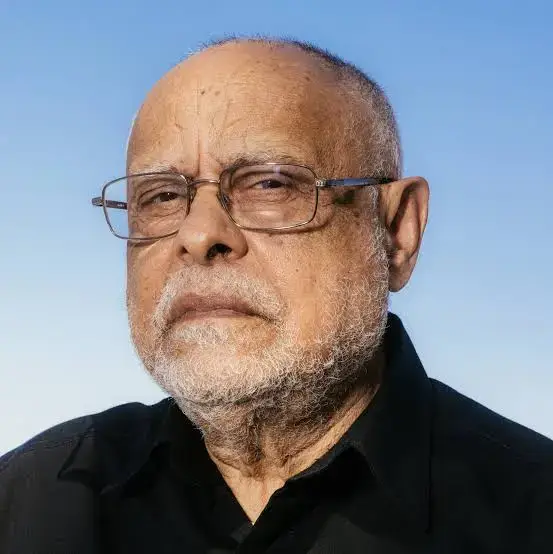
I know this first hand from working as a mid-level executive at Sony Pictures at the time. Down the hall from my small office was the suite occupied by the chief marketing officer, later studio vice chairman and president of the Academy.
I suggested Sankofa to him as a film the company might want to distribute. He agreed to view it in his private screening room, after which he pronounced that he “did not see an audience for this film anywhere in the world.”
Later, when an article on the cover of the arts section of the LA Times featured Gerima’s resounding success distributing the film himself, the exec called me into his office to let me witness him consume a heaping helping of humble pie. That was gratifying to see, but it did not make up for the frustration of not having been listened to in the first place.
Today, in the midst of book bans, right-wing takeover of news media, the closure of museum departments and exhibits, and the cancellation of conferences and speakers, we who can and who care must continue to make and share works that tell our stories with boldness, creativity, authenticity, and by all the means at hand.
“Until lions have their own historians, tales of the hunt will always glorify the hunter.”
- African Proverb popularized by novelist Chinua Achebe
