
To Make A World
The standard for Hollywood feature films is that one minute of film equals one page of a script, and that script usually follows a Three-Act structure. Act One, the Set-up, introduces the protagonist and an inciting incident that forces them into Act Two, the Confrontation or Rising Action, where the protagonist faces escalating obstacles and a mid-point twist. Act Three is the Resolution. The conflict is resolved, and a new world order is established. The acts often extend chronologically, from past to present.
After more than a century of filmmaking, we, the collective audience fed on Western hegemony, automatically expect and acquiesce to that timeline. Our brains’ neural pathways are now so well-worn that we may even balk or outright refuse a worldview that differs from what we have been conditioned to accept as true about ourselves, our history, and our place in the world.
But that linear trajectory is not what unfolds between the first and last frames of the new film, BLK NWS: Terms & Conditions. The personal and historical, the real and the surreal, the past and the present, the lyrical and the literal, the documentary and the narrative play equally in this exciting new work.
“BLK NWS isn’t a single object. It’s an ecosystem. It is a pulse that connects imagination, rhythm, and community. It’s a living continuum of Black thought and image.”
Jon Sesrie Goff, filmmaker, After Sherman
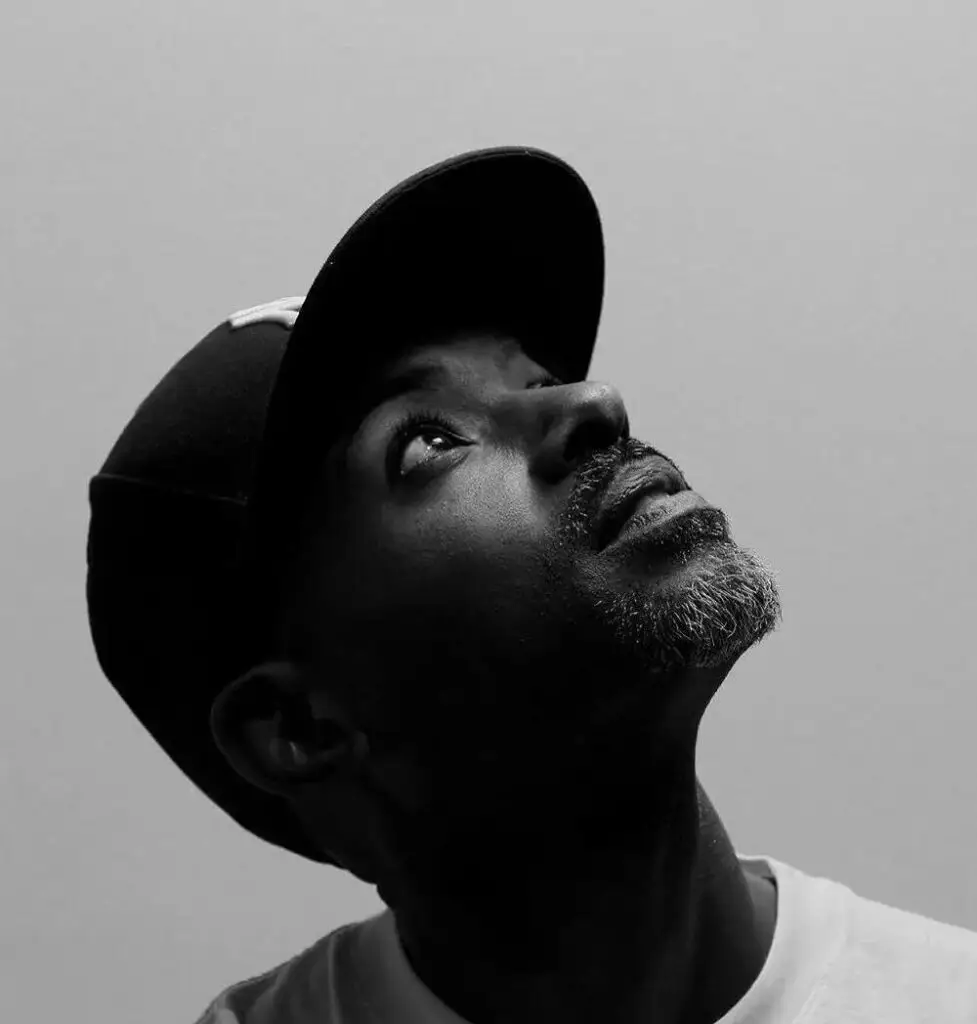
Kahlil Joseph is the film’s director. He is also the visionary behind the visuals in Beyoncé’s Lemonade and Kendrick Lamar’s good kid mAAd city videos, and founder of the Underground Museum in Los Angeles.
Joseph used his video art installation and conceptual news program, first exhibited at the Venice Biennale in 2019 and also called BLK NEWS, as the film’s source material. Joseph describes it as “less of a film and more of a space to enter, a collage of memory.” Viewing it necessitates using vision along with eyesight, imagination as well as intellect, and the courage to envisage beyond our programming.
I first saw the piece at the Eaton Workshop, a boutique hotel in Washington, D.C., where it played in the lobby for a couple of years. I knew immediately it was something I wanted to include as a March On! event, one way or another.
So when I read that it had been expanded into a film which premiered at Sundance, it was just a matter of where and when we would present this cultural wonder. Thanks to a fruitful partnership with Eaton, we presented the film and its director first to some engaged students and supportive faculty at Howard University, and then to an eager general public at Eaton last month.
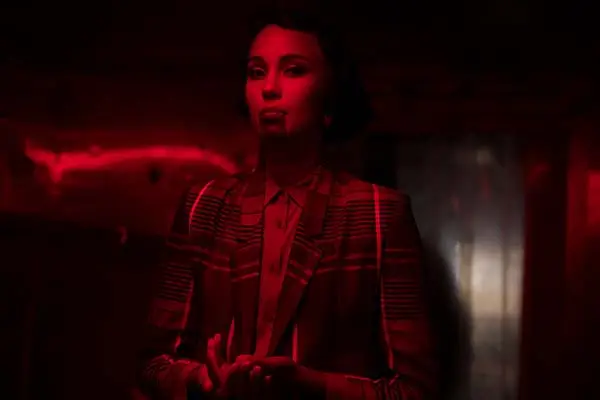
An unused gift from Joseph’s late father to his brother, a copy of W.E.B. DuBois’ Encyclopedia Africana, posthumously completed by Henry Louis Gates, Jr. and Kwame Anthony Appiah, serves as the inciting incident and spine of the film. So does the voyage of the fictional ship Nautilus, with a diasporic array of passengers, artists, art patrons, and journalists attending an onboard Art Biennale.
It is a journey that conjures up the migration of people and ideas both mythical and extant. , They include the Resonance Field, a geographic area where many of the enslaved Africans were cast into the Atlantic Ocean during the Middle Passage (also called the South Atlantic Anomaly, an expanding and weakening region in the Earth’s magnetic field); Marcus Garvey’s back-to-Africa Black Star Line; Fumilayo Ransome-Kuti, pioneering Pan Africanist mother of Fela; and an undercover, beaded mask-wearing Ghanaian investigative journalist named Anas.
From there, Joseph – with a hefty assist from a generous community of his supportive fellow writers, filmmakers, actors, researchers, and archivists – weaves together newsreels, photos, art, videos, music, quick cut editing, historical exposition, and cultural critique. The experience forces one to surrender to waves of vivid recollections of both the past and the hereafter. In fact, the question, “Do you remember the future?” is asked more than once in the film.
It is a film worth seeing more than once, and it will stay on your mind long after. Joseph ushers us into a world of his making on our behalf – we who care and dare to unearth the mis-told and untold stories of African-ancestored people. To claim them as our own and possess them outright. To carve new neural pathways in our collective consciousness and tell them in our own ways. And finally, to project ourselves into a future that we shape and inhabit, on this planet, in this dimension, and any other we dare to venture.
Note: As official government messaging around the current war circulates social media videos that intersplice pop culture imagery—Iron Man, Breaking Bad, Braveheart, Top Gun, and even SpongeBob—with scenes of real-world bombing, set to rock and hip-hop samples, we have even more reason to reclaim the integrity of our minds and worldview through the digital entertainment we choose to consume and support.
march On!
